
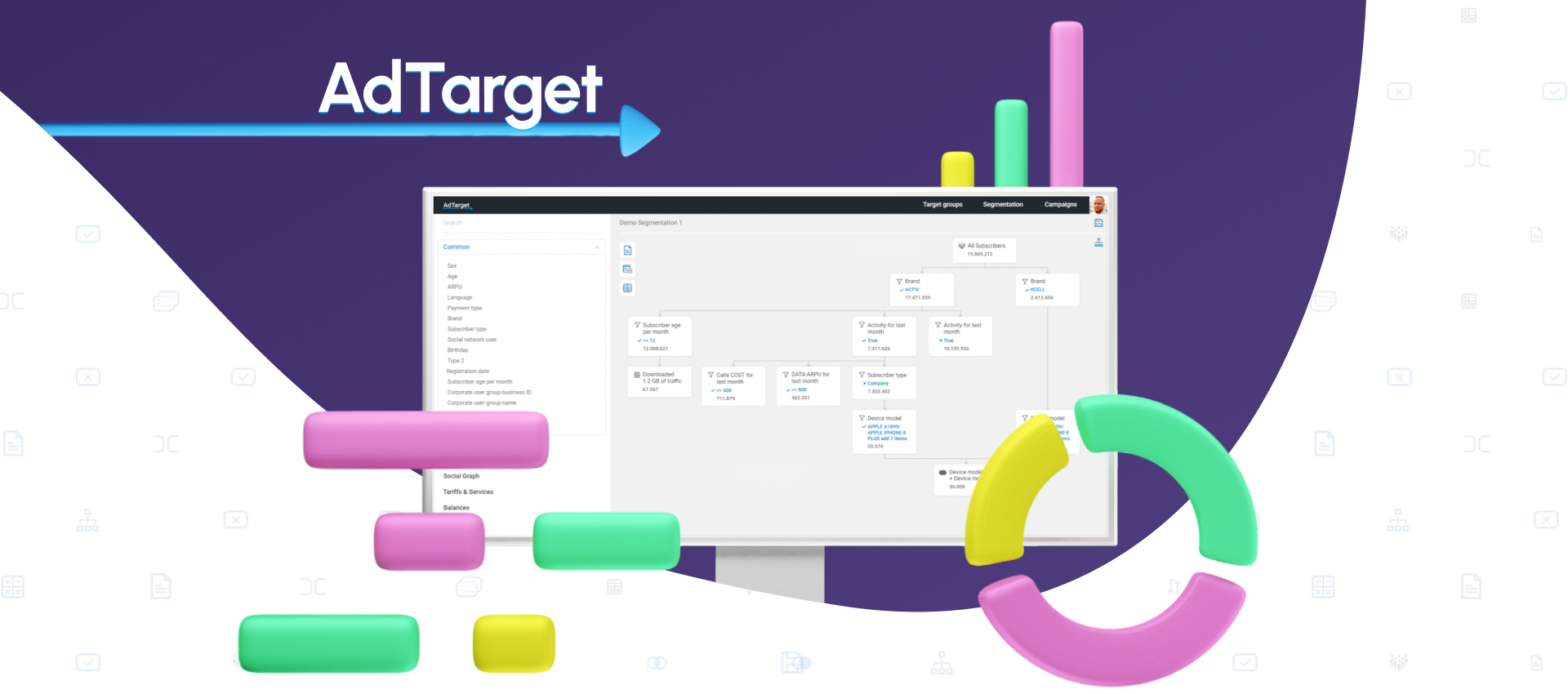
AdTarget is an enterprise B2B SaaS platform engineered to centralize, automate, and optimize complex cross-channel digital advertising campaigns. The platform ingests massive amounts of multi-platform data to help performance marketing teams orchestrate high-budget campaigns, analyze audience behaviors, and automate media buying.
As the Senior Product Designer, my mandate was to overhaul the fragmented, highly technical legacy architecture into a seamless, high-performance web application. I led the end-to-end UX/UI strategy to transform complex data matrices, scheduling systems, and automation logic into an intuitive, high-visibility workspace built for speed and precision.
End-to-end product design for multi-channel ad management
Context
Problem
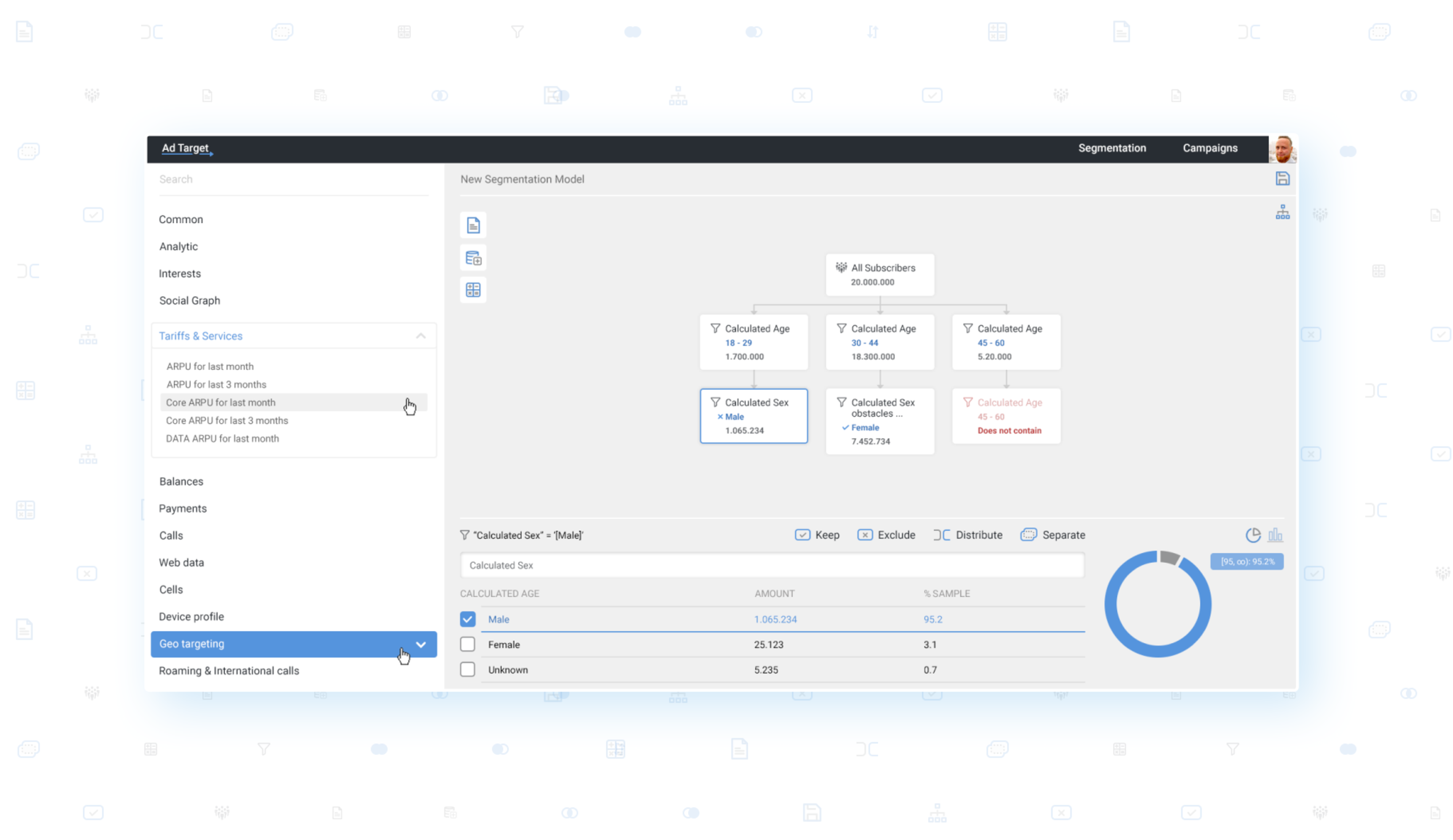
Data Fragmentation & Cognitive Overload
Enterprise marketers routinely manage campaigns across disparate ad networks, causing siloed data, tracking errors, and extreme cognitive fatigue. AdTarget needed an interface that could ingest vast multi-dimensional data sets and present them seamlessly, ensuring users never felt overwhelmed by numbers or lost situational awareness of their live ad spend.
The Execution Barrier in Automation
Configuring advanced multi-channel workflows and cross-conditioned audience segments traditionally required deep technical knowledge, specialized scripts, or rigid, text-based Boolean forms. The platform lacked a scalable, visual mechanism for non-technical media buyers to confidently design, adjust, and deploy complex automated marketing paths without fear of misallocating massive budgets.
Process
and Proposal
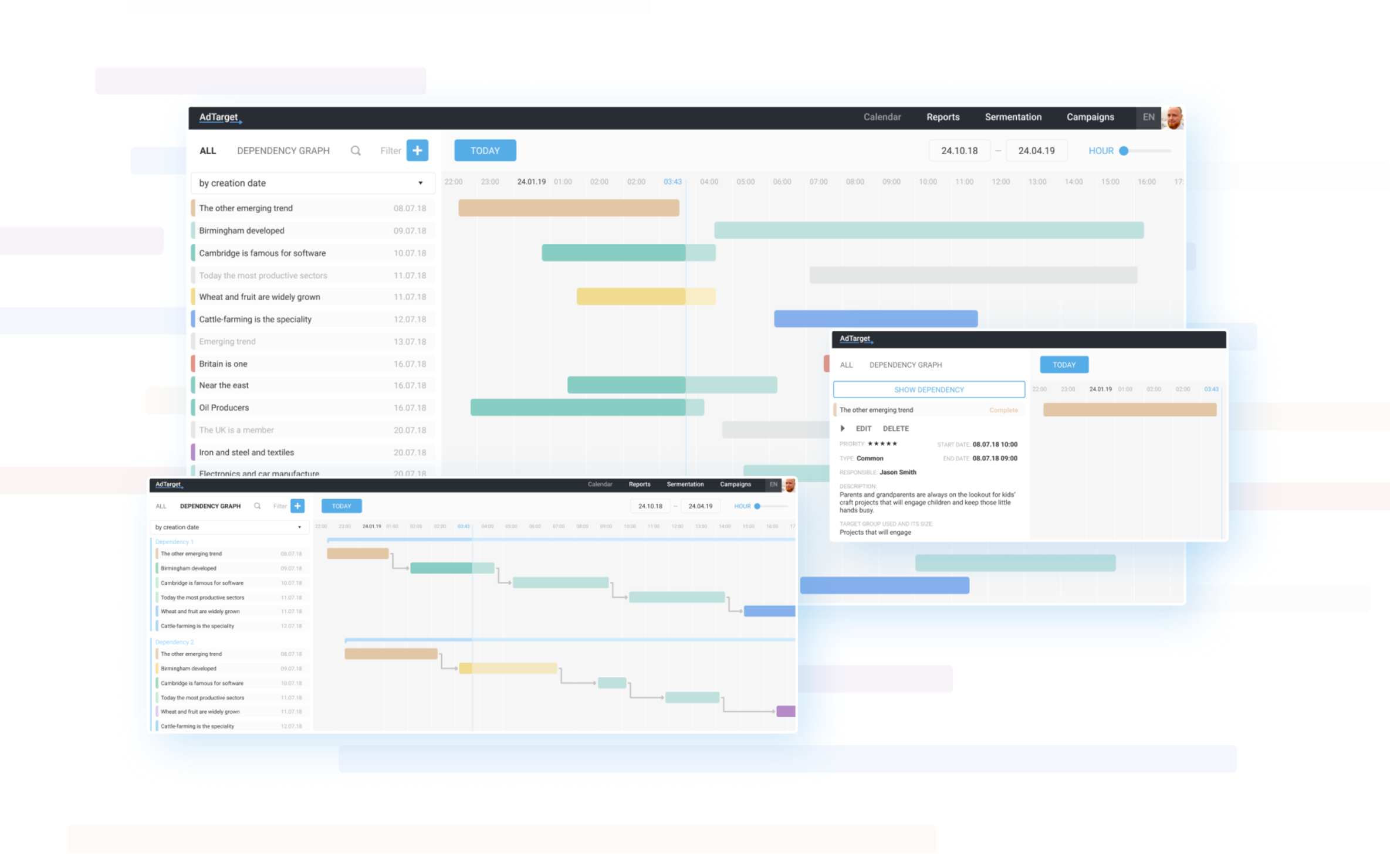
Phase 1: "Always Under Control" – Interactive Timeline & Resource Allocation
Managing overlapping campaign lifecycles, budgets, and distribution schedules across channels through standard forms frequently leads to costly user errors. I reimagined the scheduling mechanics into an interactive, visual media flighting timeline.
What I Built:
A multi-layered, interactive Gantt-style timeline interface featuring contextual inline editing, synchronized budget-caps markers, and expandable campaign nesting views.
Why This Way:
Giving users a visual timeline provides immediate spatial understanding of active, upcoming, and paused campaigns. This safeguards teams against overlapping flight dates and budget conflicts, ensuring they remain "always under control."
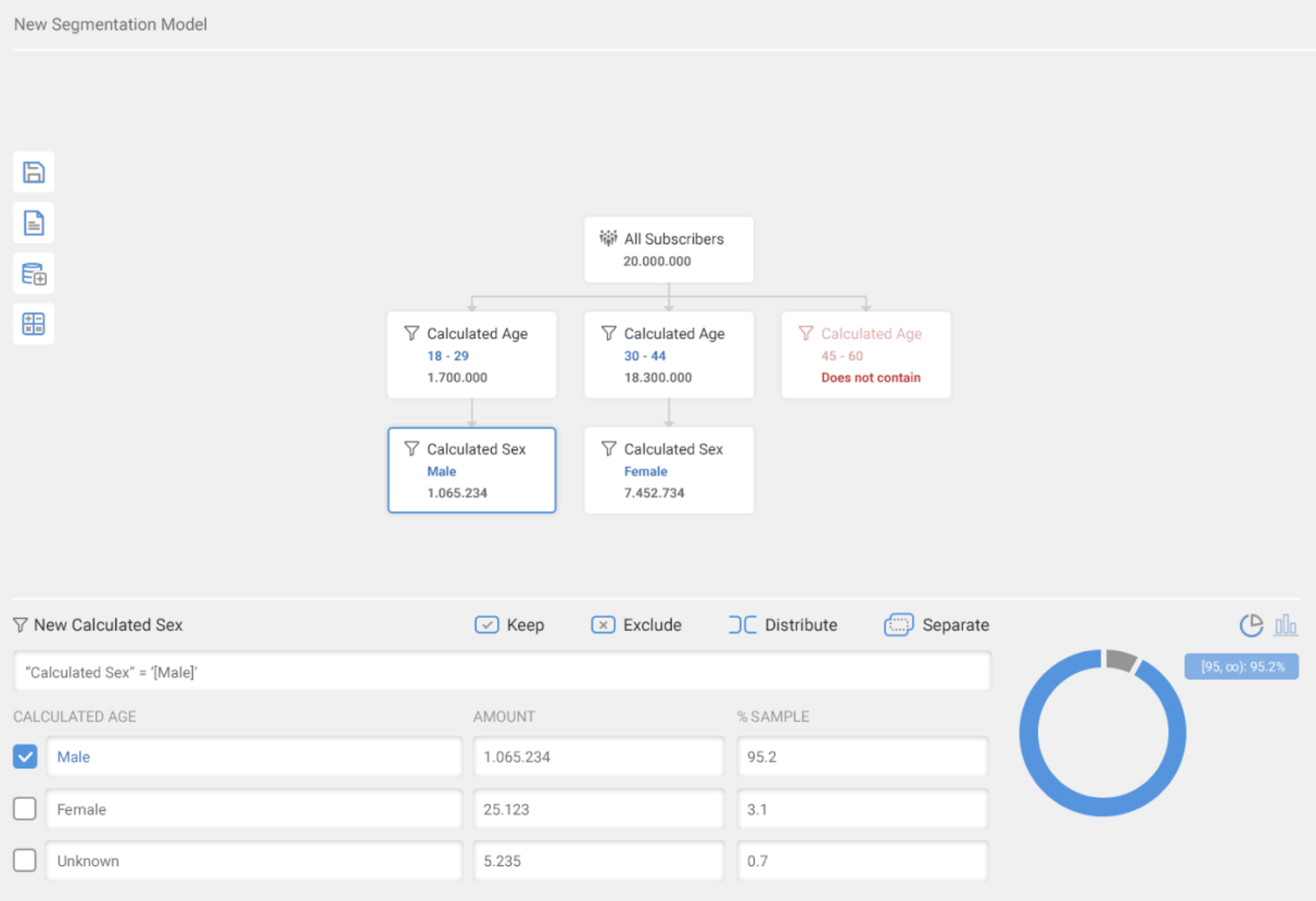
Phase 2: "Multidimensional Segmentation" – Analytics & Data Visualization
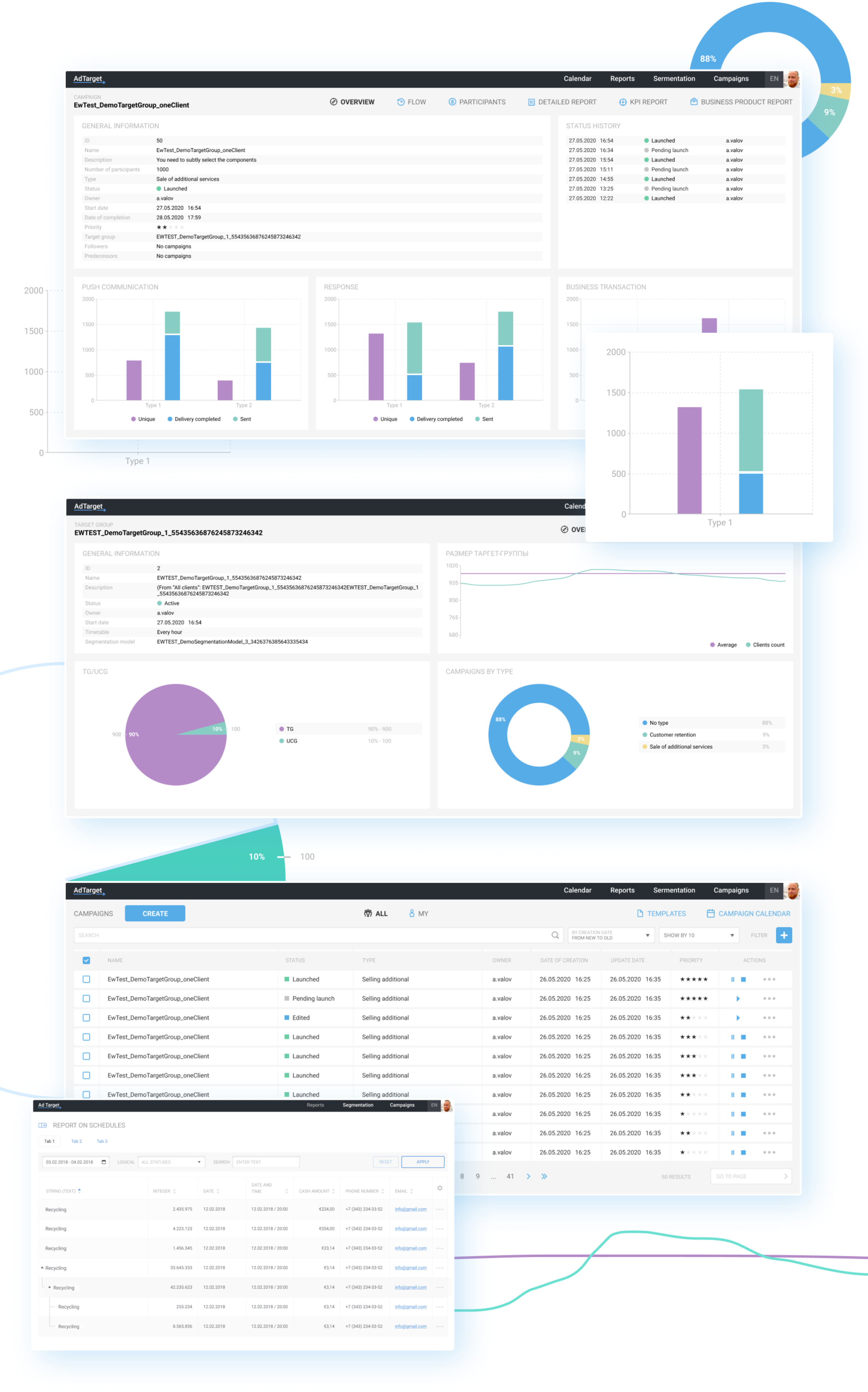
Audience targeting frequently stalls when users must navigate dense tables to extract value. I designed a modular analytics interface that interprets intricate audience metrics into scannable data graphics.
What I Built:
A multi-view analytics framework pairing deep, filterable tables with highly digestible interactive donut charts, multi-variable bar graphs, and real-time comparative trend lines.
Why This Way:
Visualizing demographic and behavioral data points side-by-side allows marketing managers to isolate key audience performance trends at a single glance, eliminating long spreadsheet deep-dives and accelerating data-driven choices.
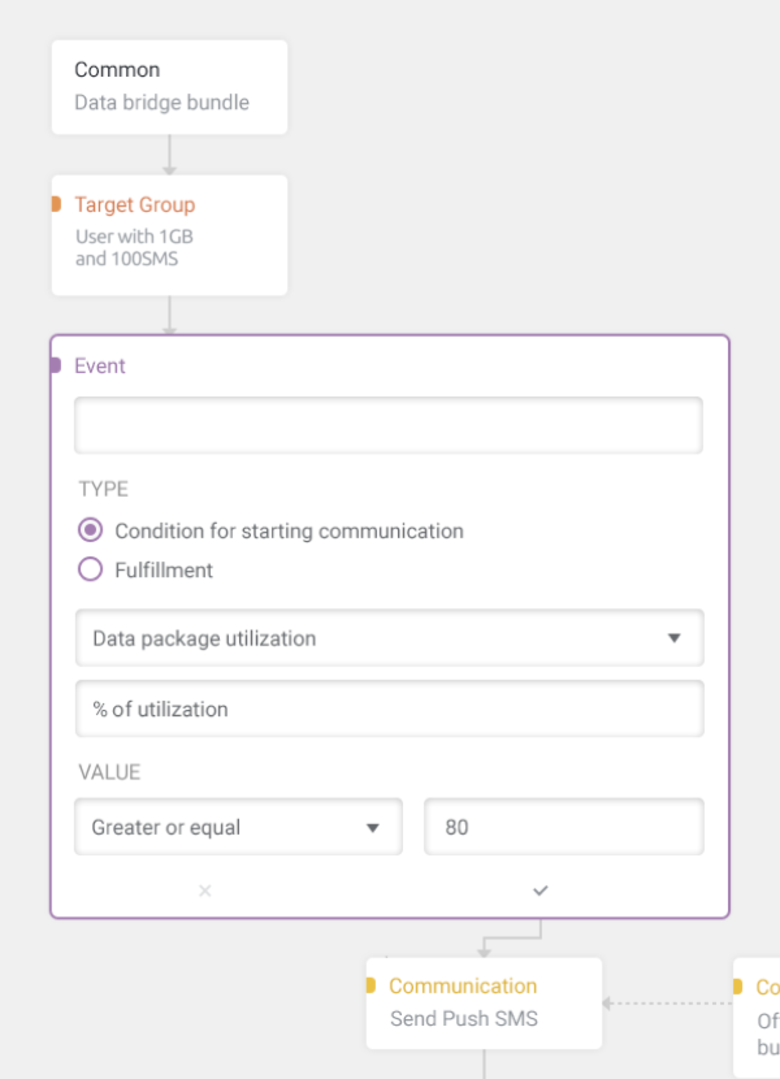
Phase 3: "Unified Campaign Management" – Node-Based Canvas Architecture
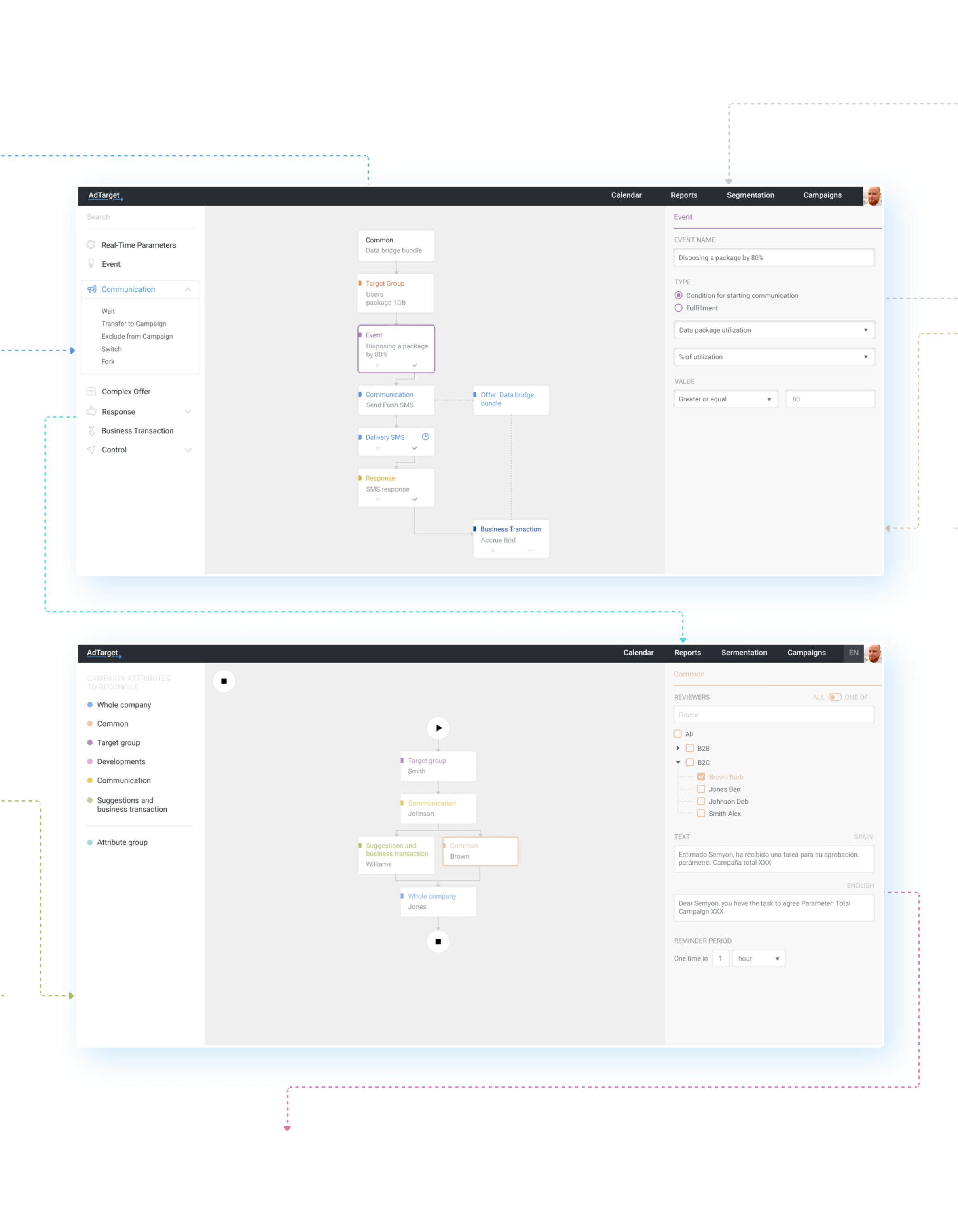
To bridge the execution barrier, I replaced rigid, text-heavy parameter forms with a spatial visual workflow creator that turns abstract automation rules into tangible logical maps.
What I Built:
An intuitive drag-and-drop workflow canvas built on customizable step-nodes, connecting channels, conditional triggers, action items, and data routes into clear visual trees.
Why This Way:
Mapping automated sequences visually removes the abstraction of backend automation rules. Media planners can construct, audit, and troubleshoot complex multi-step customer journeys with clear logic paths, reducing deployment errors and giving teams confidence in their automated funnels.
Result
By simplifying multi-dimensional data models and introducing high-clarity visual workspaces, the created platform achieved exceptional user adoption alongside significant operational improvements
Drastic Reduction in Campaign Setup Time: Replacing form-based rule writing with the node-based canvas and the visual timeline streamlined campaign orchestration, yielding a 45% reduction in end-to-end setup times for active marketing teams.
Decreased Critical Configuration Errors: The "Always Under Control" timeline and unified workspace successfully reduced accidental budget overruns and overlapping scheduling conflicts by 35%, bolstering platform trust among high-spend accounts.
Accelerated Cross-Team Collaboration: The intuitive design system and scannable visual workflows allowed cross-functional stakeholders (creative directors, data analysts, and executive sponsors) to easily parse live campaign health without training, boosting cross-organizational platform utility.
Seamless Interface Scalability: The modular design system proved highly resilient, enabling engineering teams to rapidly ship new feature dashboards, filtering systems, and third-party integrations with absolute consistency and minimal front-end development friction.